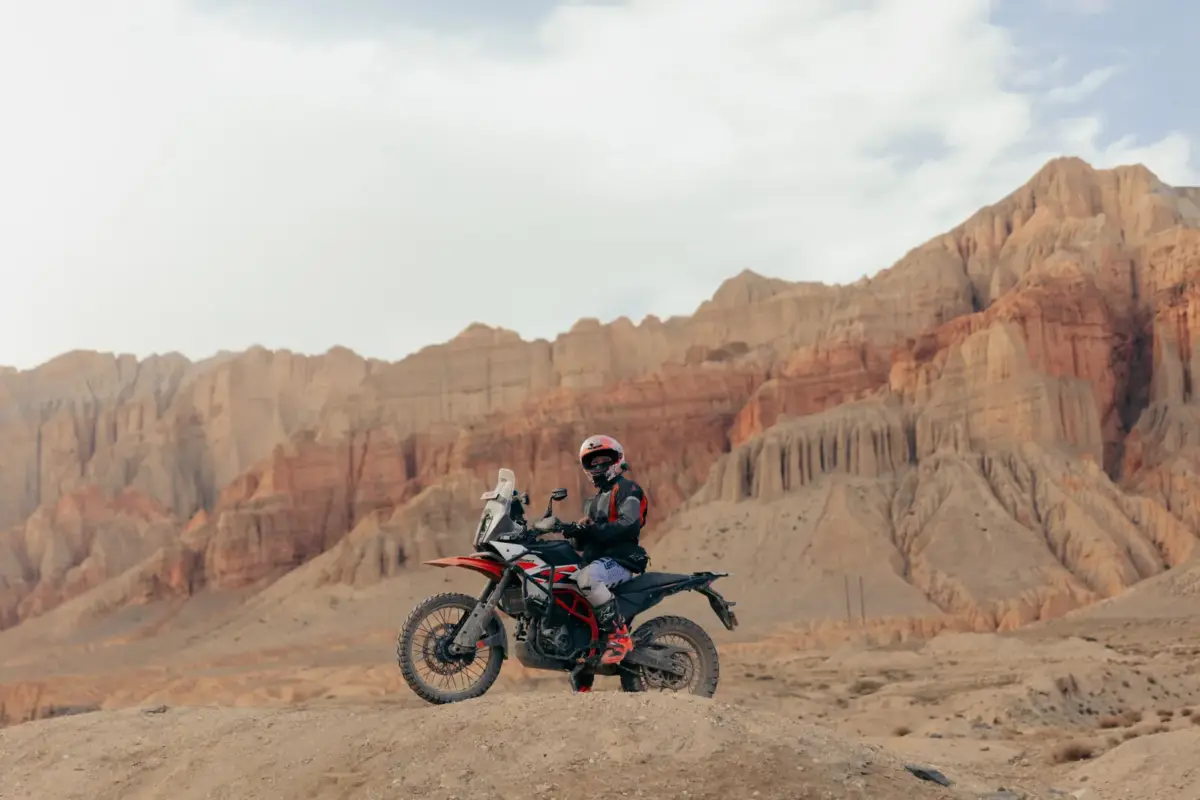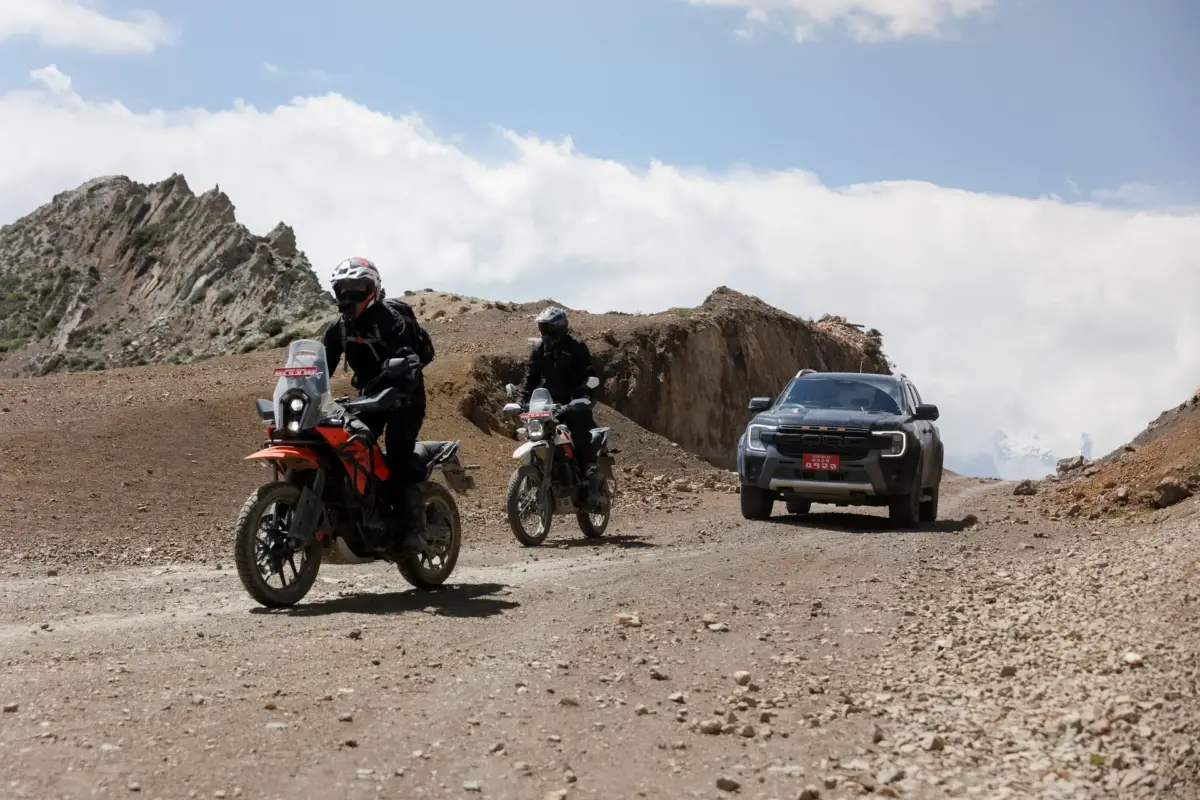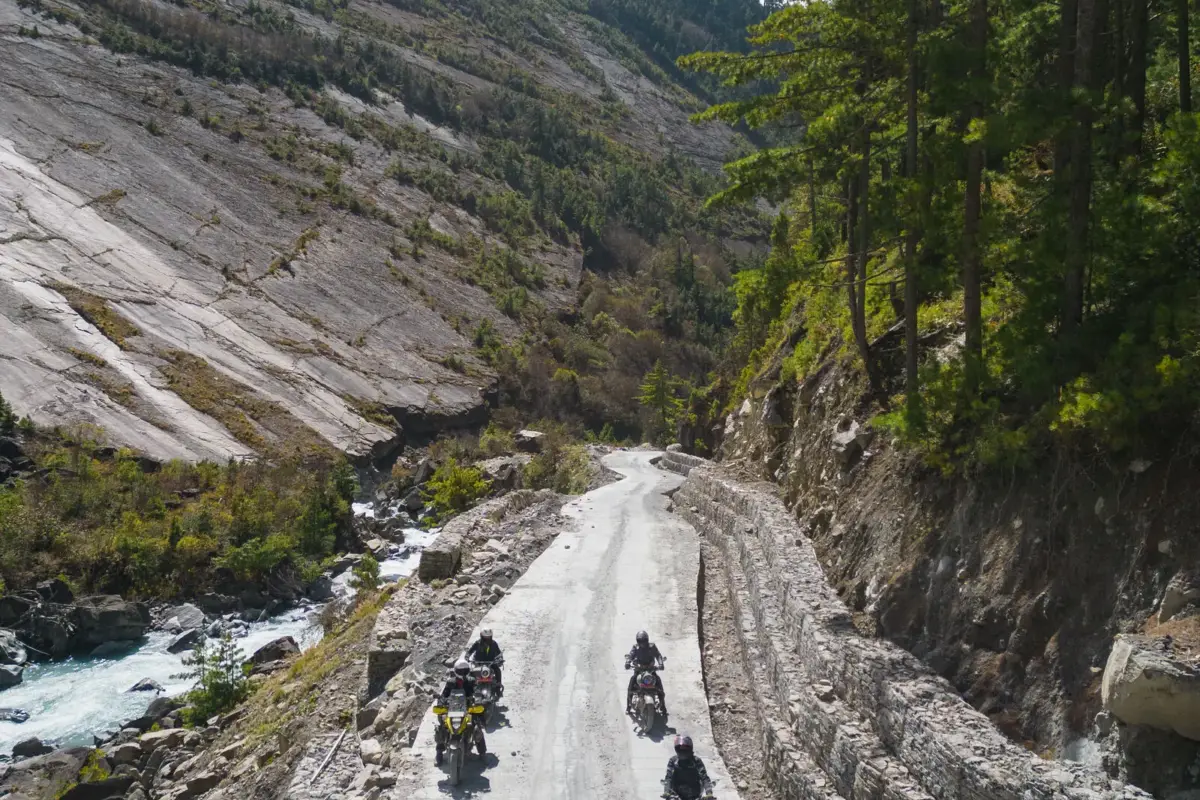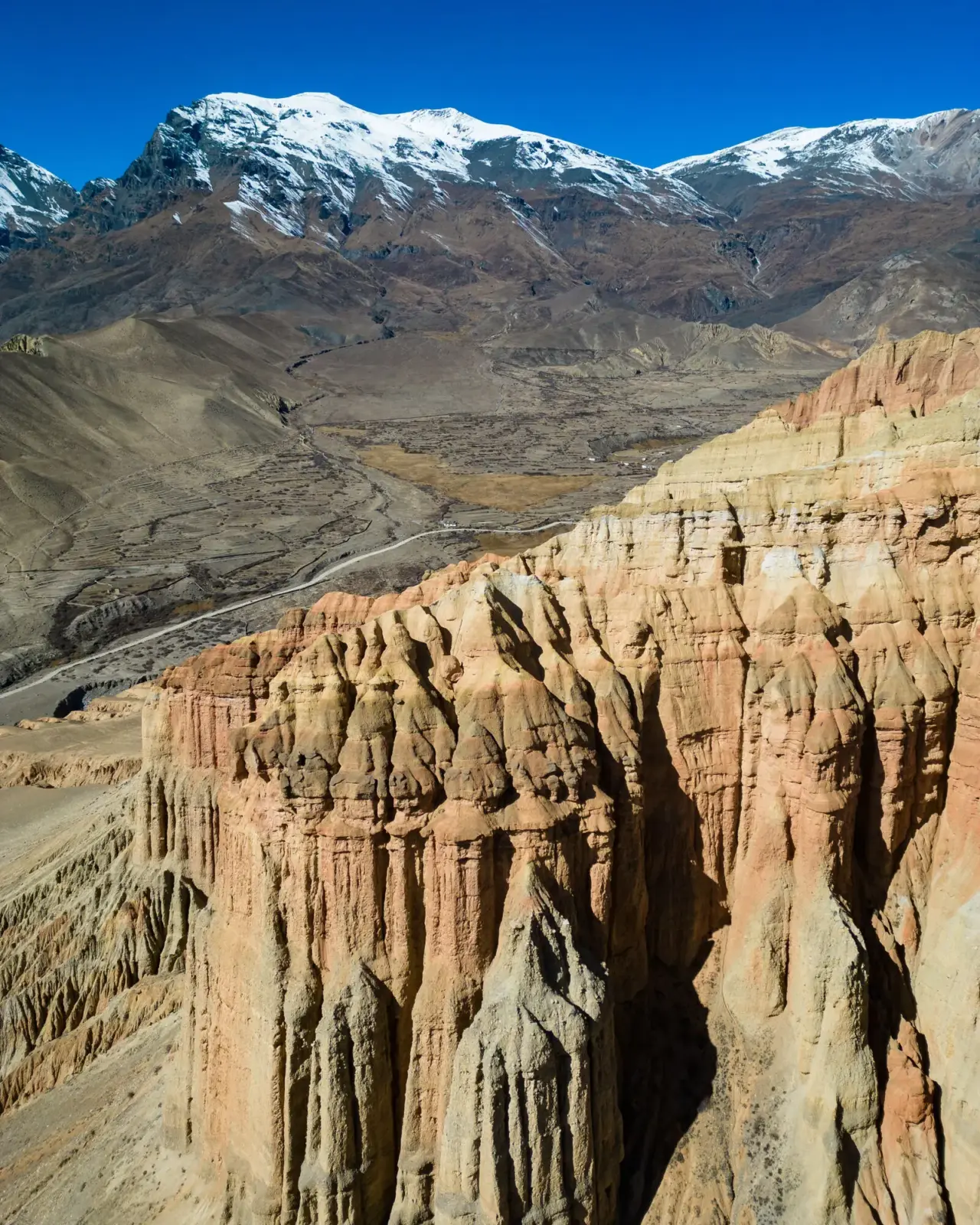
Upper Mustang sits in the rain shadow of the Annapurna and Dhaulagiri massifs, which is why it looks more like Tibet than the rest of Nepal. That same geography sets the riding calendar. While the rest of the country is under monsoon cloud from June to September, Mustang stays mostly dry, and the shoulder seasons on either side of it are the sweet spot for a motorcycle expedition.
Autumn: October to early December
This is the classic window. Skies are at their clearest after the monsoon, the Kali Gandaki gorge is green in its lower reaches, and daytime temperatures in Lo Manthang sit comfortably in the mid-teens. Nights get cold by November, so pack for frost above 3,500 m. The trail from Kagbeni to Lo Manthang is at its best, dry and well graded, and the afternoon winds that funnel up the valley are more predictable.
Spring: March to May
Spring brings the Tiji festival to Lo Manthang, usually in May, and warmer nights than autumn. Haze from the plains can soften the big mountain views in April, but the high desert itself is spectacular, with apple orchards in blossom around Marpha and Jomsom. Expect a few late snow patches on the passes early in the season.
Summer and winter
Riding in Mustang during the monsoon months is possible because of the rain shadow, and the region is quiet and green, but the road from Pokhara to Beni and Tatopani can be hit by landslides and river crossings become serious. Winter is dry and empty, with stunning light, but temperatures drop well below freezing in Lo Manthang and many guesthouses close. We run private winter departures for experienced riders only.
Our recommendation
If it is your first Himalayan expedition, aim for the second half of October or the first half of November. You get dependable weather, open lodges and the best light for photographs. Talk to us about dates and we will match you to a departure.
Ready to ride it yourself?
Tell us your dates and riding level and we will send a route plan and quote within 24 hours.