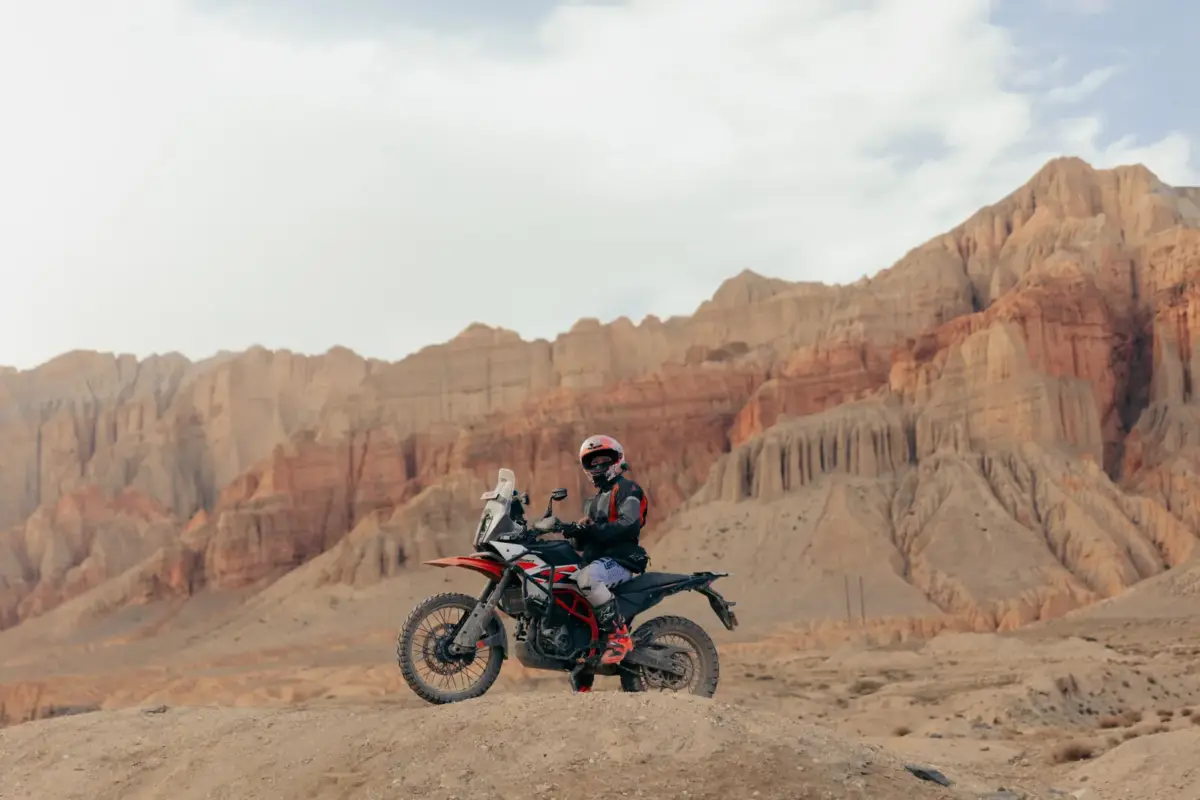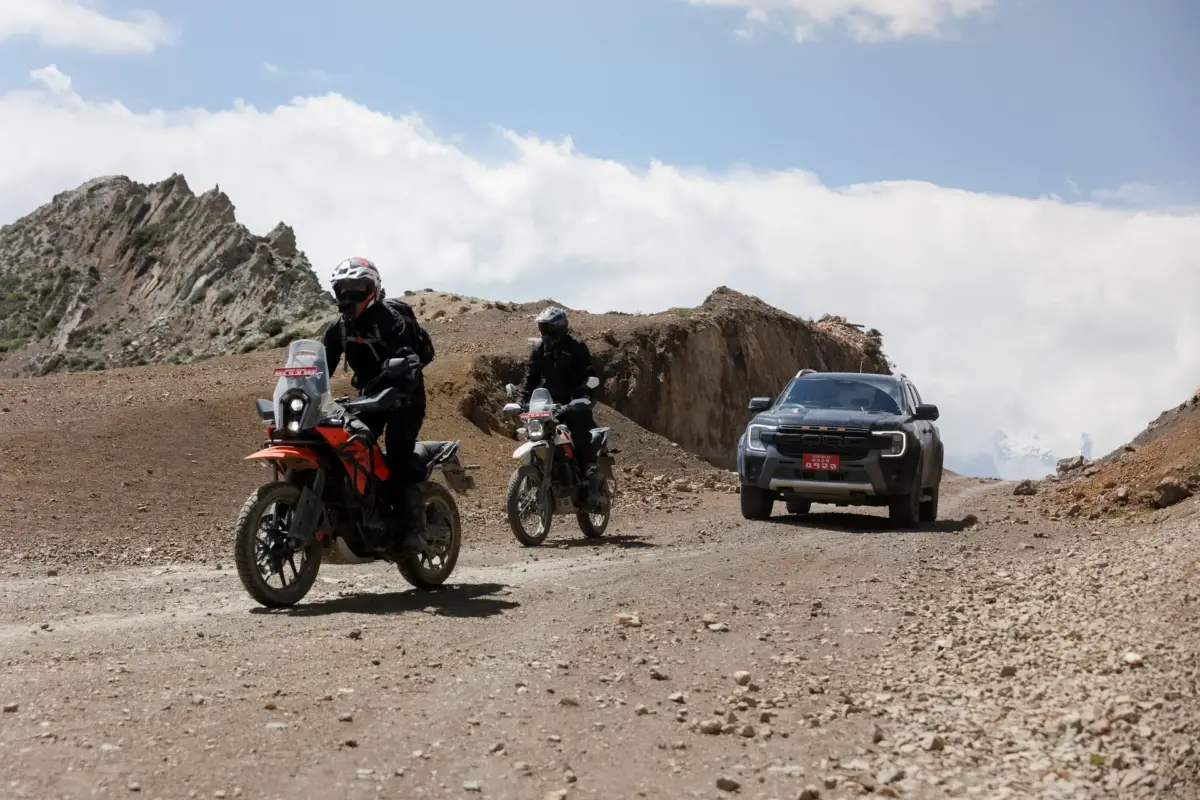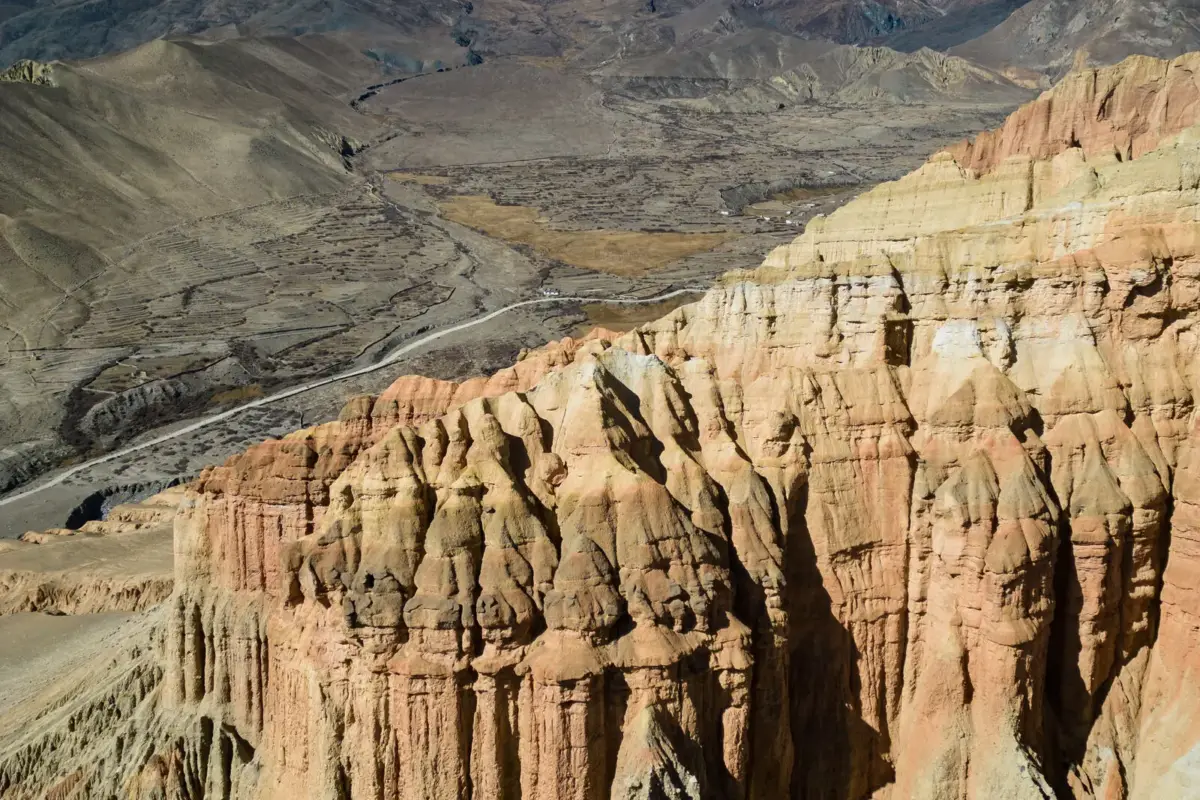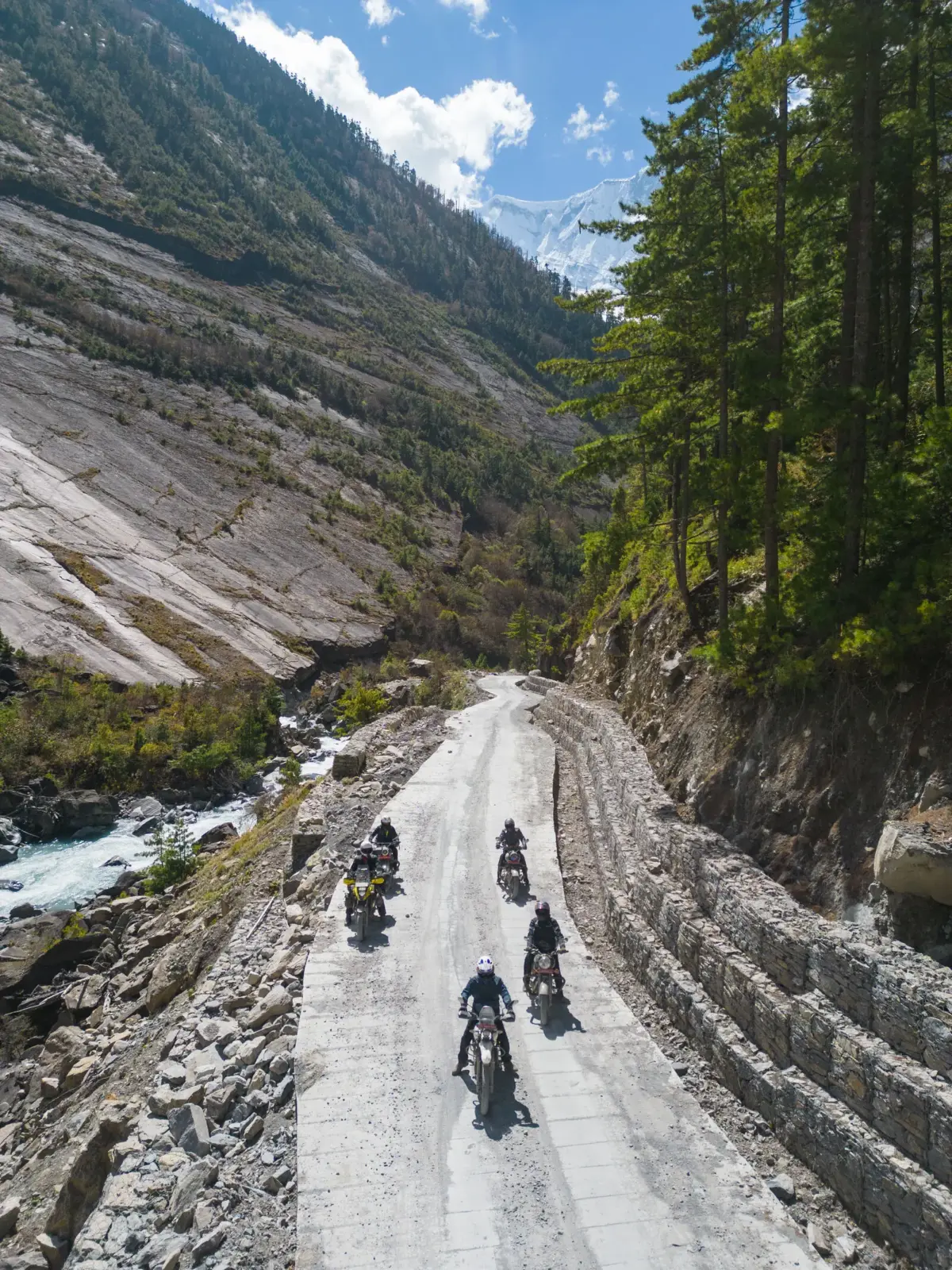
A Himalayan riding day can start in a warm river valley at 800 m and finish above 3,500 m with a cold wind coming off the peaks. The gear that works is the gear that adapts. Here is what our guides carry and what we ask every rider to bring.
Riding kit
- Helmet: a full-face or adventure helmet with a good visor. Dust is the enemy on the Mustang trail, so bring spare visor cleaner and a buff.
- Jacket and trousers: an adventure suit with armour and removable thermal liners. Waterproof shells matter more in spring and on the lower valley roads.
- Gloves: two pairs. Vented for the valleys, insulated for the passes.
- Boots: proper riding boots with ankle support. Trail shoes are not enough for river crossings and rocky sections.
Layers
Think in three layers: a merino base layer, a fleece or light down mid layer, and your riding jacket as the shell. Put a down jacket and a warm hat in your tank bag for the top of the passes and for evenings in Lo Manthang or Manang, where guesthouses are heated by a single stove.
Hydration and altitude
Dehydration makes altitude symptoms worse. Carry a two-litre hydration pack and drink steadily through the day. Our support vehicle carries water, snacks and oxygen, but the habit of sipping while riding is what keeps headaches away. Sunglasses and high-factor sunscreen are essential; the sun at 3,800 m is brutal even in November.
Leave at home
Hard luggage, heavy camera bags and cotton clothing. Everything that is not on your bike travels in the support 4×4 in a soft duffel, and the lighter you ride, the more you enjoy the technical sections.
Ready to ride it yourself?
Tell us your dates and riding level and we will send a route plan and quote within 24 hours.